Home Updates That Can Make an Older Interior Feel Fresh Again
Homes do not necessarily need major problems to start feeling dated. Sometimes the structure is perfectly functional, but the interior no longer reflects how the household lives. Darker finishes, tired flooring, crowded rooms, poor lighting, or an awkward layout can gradually make a familiar home feel less comfortable and less current.
Refreshing an older interior does not always mean following the latest design trend or replacing everything at once. In many cases, the biggest improvement comes from identifying what makes the space feel dated and addressing those elements with a clear plan.
The best updates combine appearance with everyday function, creating rooms that feel cleaner, brighter and more useful without relying on short-lived styles.
Start by Identifying What Feels Dated
Before choosing paint colours or browsing material samples, spend some time looking at the home objectively.
Which areas immediately feel old? Is it the flooring, cabinetry, lighting, trim, wall colour or overall layout? Are there too many different finishes competing for attention? Does furniture make certain rooms feel smaller than they actually are?
It can also help to consider how the home feels at different times of day. A room that appears pleasant in bright daylight may feel dark and closed in during the evening.
Making this assessment first prevents homeowners from spending money on isolated cosmetic changes that do little to improve the overall atmosphere.
A dated interior is often the result of several elements working together rather than one specific feature.
Improve the Way Light Moves Through the Home
Lighting can have a surprisingly strong effect on how an older interior feels.
Natural light should be considered first. Heavy window coverings, oversized furniture or visual obstructions can make a room feel darker and smaller. Where practical, simplifying these elements can help the available daylight have more impact.
Artificial lighting matters just as much after sunset. A single ceiling fixture may not provide enough illumination for reading, cooking, working or relaxing.
Layered lighting can make a room feel more flexible. General lighting provides overall illumination, while task and accent lighting can support specific activities or highlight architectural features.
Fixtures themselves can also influence the appearance of a room. Replacing visibly dated fixtures with simpler designs can create a noticeable change without requiring an extensive renovation.
Any electrical changes should be assessed and completed in accordance with applicable requirements by appropriately qualified professionals.
Create a More Open Visual Flow
A home can feel dated when every room appears visually disconnected.
Different flooring materials, strong colour changes, bulky furniture and excessive decorative elements can interrupt the sense of continuity between spaces.
This does not mean every room needs to look identical. Instead, consider whether there is a consistent visual language connecting the main living areas.
Similar flooring tones, complementary colours and repeated material details can make adjoining rooms feel more cohesive.
In some homes, the issue goes beyond finishes. An awkward doorway, poorly positioned furniture or unnecessary visual barriers may make movement between rooms feel more complicated than it needs to be.
Where layout changes are being considered, it is important to understand the existing construction and any local requirements before work begins.
Refresh Worn Finishes Thoughtfully
Some finishes simply show their age.
Worn flooring, damaged trim, tired cabinetry and heavily dated surfaces can make an otherwise comfortable home feel older than it really is.
The solution does not have to be extravagant. Choosing a smaller number of durable, complementary materials can often create a cleaner appearance than mixing numerous decorative finishes.
The key is consistency.
If flooring, cabinetry, counters, trim and wall colours are all updated independently, the result can still feel disjointed. Thinking about how those elements work together can produce a more polished interior.
Homeowners should also consider durability and maintenance, not just appearance. A material that looks impressive in a sample may not be practical for the way a particular household uses the room.
Give Kitchens and Bathrooms a Clearer Design Direction
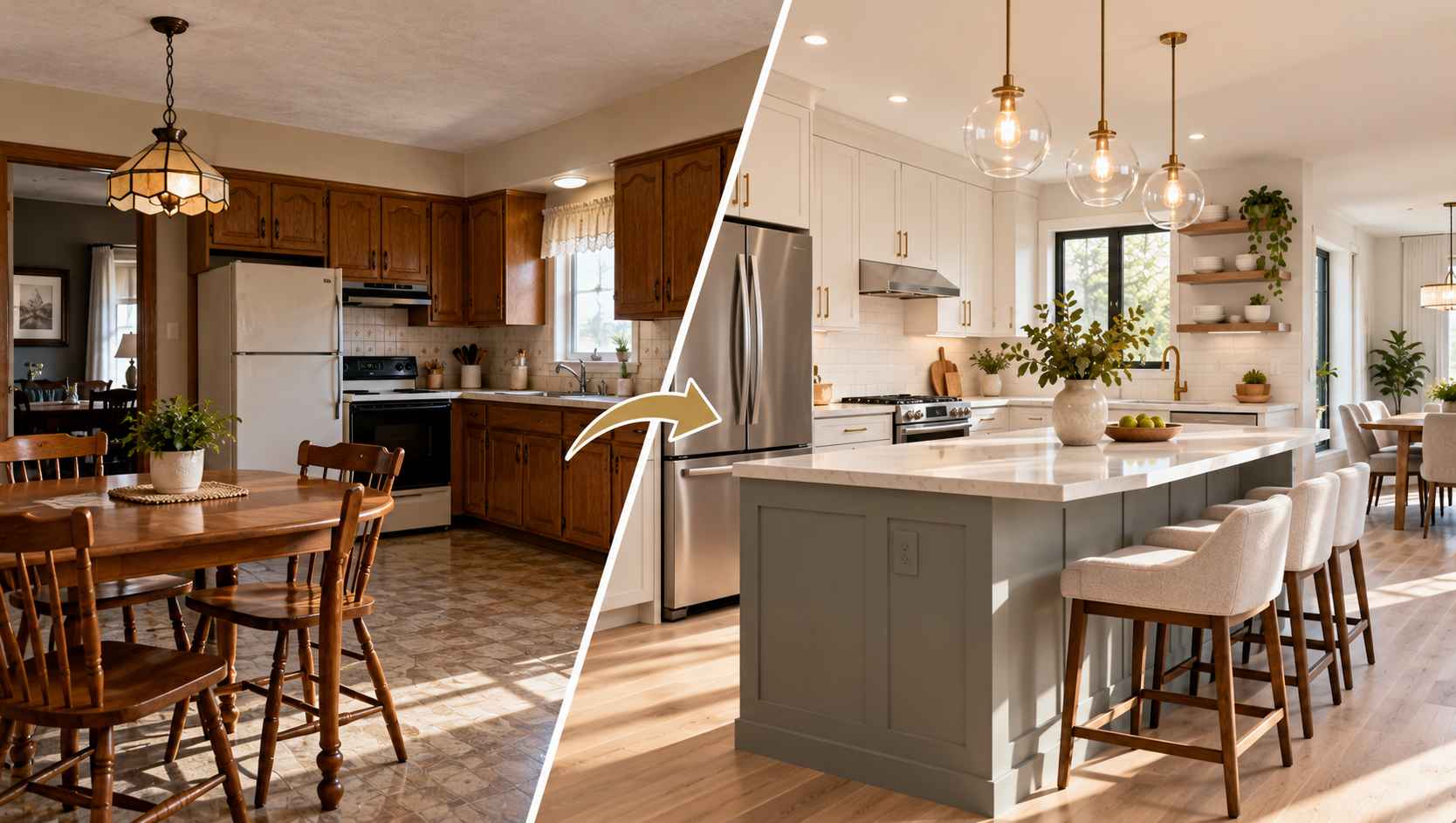
Kitchens and bathrooms often have an outsized influence on how current a home feels.
That does not mean they need to be transformed into showroom-style spaces. Instead, focus on whether the design is visually calm and functionally appropriate.
In a kitchen, consider storage, work surfaces, lighting, appliance placement and movement through the room. In a bathroom, think about storage, lighting, finishes and how easily the space can be used and maintained.
Sometimes replacing a few dated visual elements can make a difference. In other situations, the underlying layout may be the real problem.
When several components need to change together, it can be more effective to develop one coordinated plan instead of completing disconnected updates over several years. Homeowners considering home renovation planning with Amsted or working with another qualified design-build professional can use this stage to consider how design decisions and construction requirements fit together.
The objective should be a cohesive result that improves both appearance and usability.
Use Storage to Reduce Visual Clutter
Clutter can make an older interior feel even more dated.
When there is insufficient storage, everyday objects tend to remain on counters, tables and open shelves. The result is a visually busy environment regardless of how attractive the finishes are.
Improving storage can therefore have both a practical and aesthetic effect.
Consider where frequently used items are stored and whether the current arrangement makes sense. Kitchen storage, entryway organization, bathroom cabinets and built-in solutions can all influence how clear a room feels.
Before adding more storage furniture, look at the space that already exists. Sometimes reorganizing an underused area or changing how storage is distributed can accomplish more than adding another large piece of furniture.
Simplify Colour Choices
Colour can date an interior quickly, particularly when several strong colours are used in small or disconnected areas.
A simpler palette can make a home feel more contemporary without making it bland.
Neutral backgrounds can provide flexibility, while carefully chosen accents can add personality. The important consideration is how colours relate to flooring, cabinetry, furniture, natural light and adjoining rooms.
There is also no requirement to make every room the same colour. Instead, aim for enough connection between spaces that the home feels intentional.
Paint can be one of the more accessible ways to refresh an interior, but colour should be selected after considering the entire room rather than choosing a shade in isolation.
Rethink Furniture and Room Proportions
Sometimes a room feels dated because the furniture no longer suits its proportions.
Large pieces can overwhelm smaller rooms, while too little furniture can make a larger space feel unfinished. Furniture placement can also block natural movement or reduce the usefulness of a room.
Try looking at each space according to its primary purpose.
A living room should support comfortable conversation and relaxation. A dining area should allow people to move around the table. A home office should provide enough room for the equipment and activities it needs to accommodate.
This approach can reveal that a room does not necessarily need more furniture. It may simply need better positioning and fewer competing pieces.
Decide Whether Cosmetic Changes Are Enough
One of the most important renovation decisions is determining whether the problem is primarily visual or whether the home’s layout is limiting its usefulness.
If the space works well but looks tired, cosmetic improvements may be enough.
If the same frustrations keep returning despite new finishes, the underlying issue may be functional. Perhaps storage is poorly located, rooms do not connect naturally, or a space needs to serve several purposes.
This is where homeowners should step back and consider the home as a whole.
Rather than asking, “What can we replace?” ask, “What prevents this space from working the way we want it to?”
That question can lead to better renovation priorities.
Plan Several Connected Improvements Together
A renovation becomes more complicated when multiple changes affect the same areas.
New flooring may need to coordinate with cabinetry. A kitchen layout may influence lighting and electrical planning. A change to one room may affect how an adjacent space is used.
Planning these relationships before construction begins can help homeowners avoid decisions that work individually but do not work together.
A coordinated approach also makes it easier to establish priorities and distinguish essential improvements from optional aesthetic upgrades.
Where permits, structural changes or regulated trades may be involved, homeowners should confirm applicable local requirements and work with appropriately qualified professionals.
Choose a Look That Can Last
Refreshing an older interior does not require eliminating every sign of its age or following every current design trend.
In fact, a timeless approach can often provide more flexibility.
Simple materials, balanced proportions, practical storage and thoughtful lighting tend to remain useful even as decorative preferences change.
Personal style can still be introduced through artwork, textiles, furniture and smaller accessories that are easier to change later.
The result is an interior that feels fresh without becoming dependent on a particular trend.
Create a Home That Feels Current and Useful
An older home does not necessarily need to become completely new to feel different.
Sometimes the biggest transformation comes from improving light, reducing clutter, simplifying finishes and making better use of the existing layout. In other cases, recurring frustrations may point toward a larger renovation that addresses several connected problems at once.
The most effective approach begins with understanding why the home no longer feels right.
Look beyond individual finishes and consider how rooms connect, how people move through the space, where clutter collects and which areas no longer support everyday routines.
A thoughtful renovation should ultimately do more than make a home look updated. It should make the space feel more comfortable, coherent and useful.
That balance between appearance and function is what allows an older interior to feel fresh again without chasing a style that may soon look dated itself.